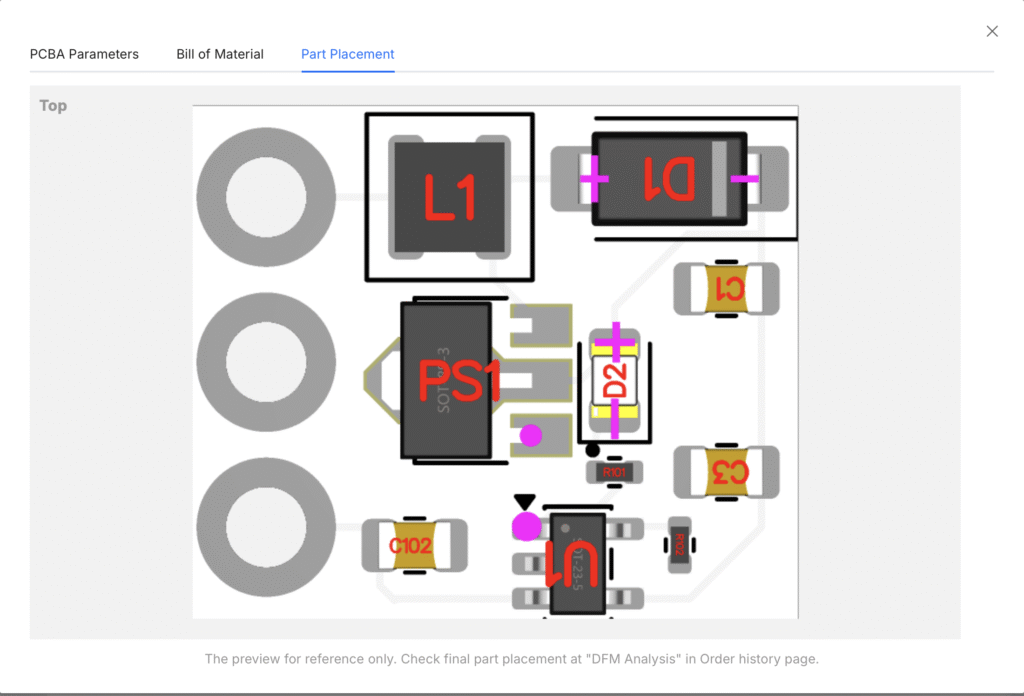
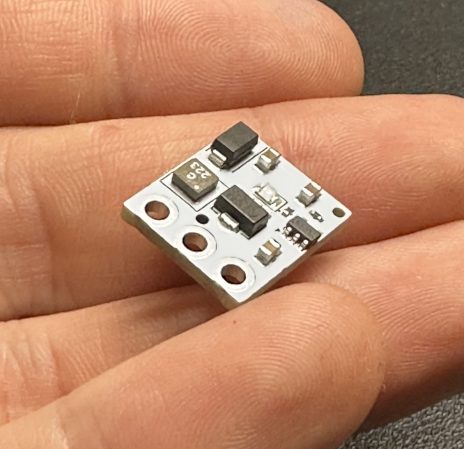
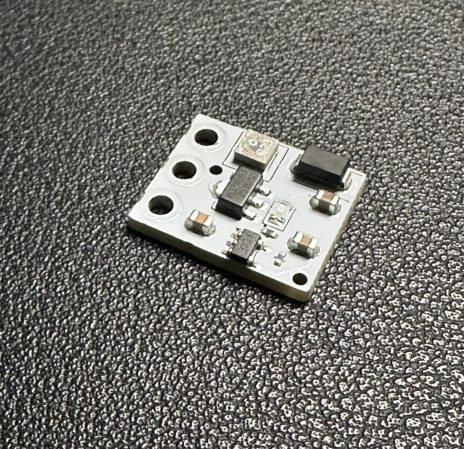
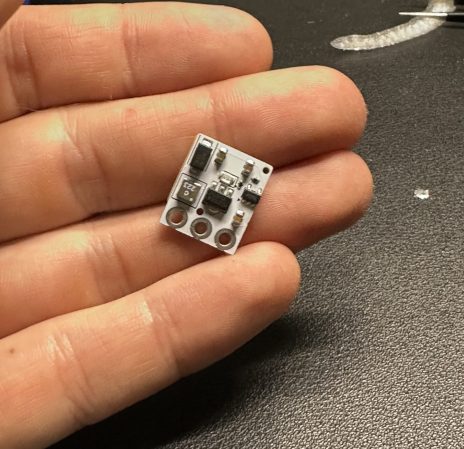
This project is acompact battery-to-battery charging system, designed to safely charge a3.7 V Li-ion battery from another 3.7 V Li-ion battery. The goal was to create aportable power-sharing solutionusing proper power-management techniques, rather than directly connecting batteries, which is unsafe. The system boosts the source battery voltage to5 V, then uses adedicated Li-ion charge controllerto apply the correctCC/CV (Constant Current / Constant Voltage)charging profile to the target battery.
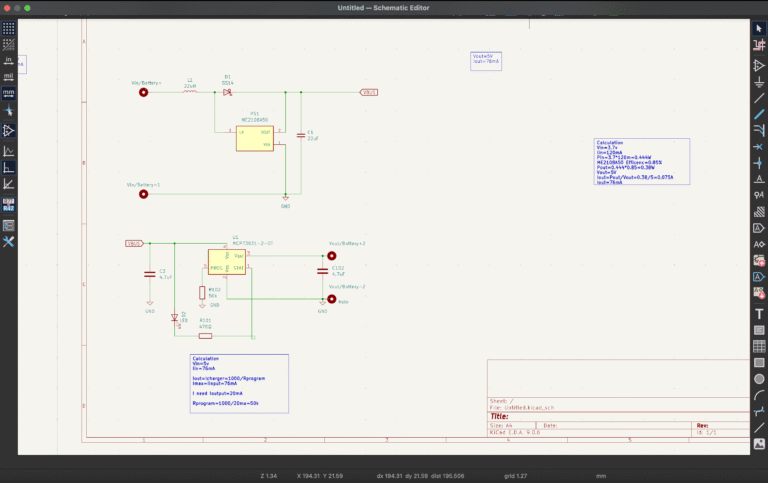
The complete schematic was designed in KiCad, including component selection, electrical calculations, and layout considerations for manufacturability.
Boost Converter Stage A ME2108A50 boost converter steps the battery voltage (~3.0–4.2 V) up to a regulated 5 V (VBUS). This stage uses an external 22 µH inductor, a Schottky diode, and ceramic capacitors to achieve stable and efficient operation.
Battery Charging Stage The regulated 5 V output feeds an MCP73831 Li-ion charge controller, which safely charges the second battery using a programmed charge current. The charging current is set via a program resistor, and an LED indicator provides charging status feedback.
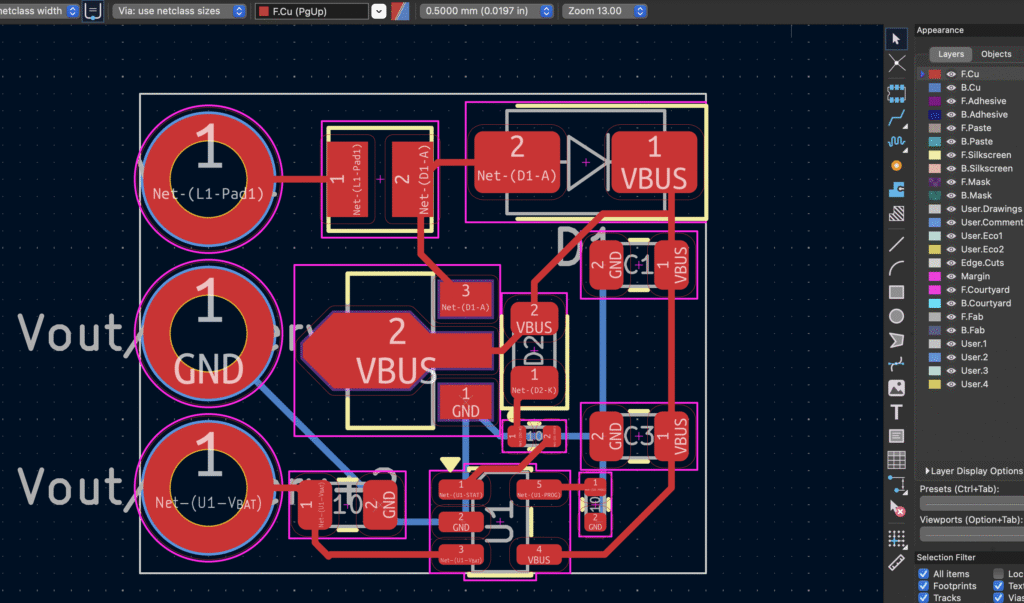
Route PCB (KiCad)
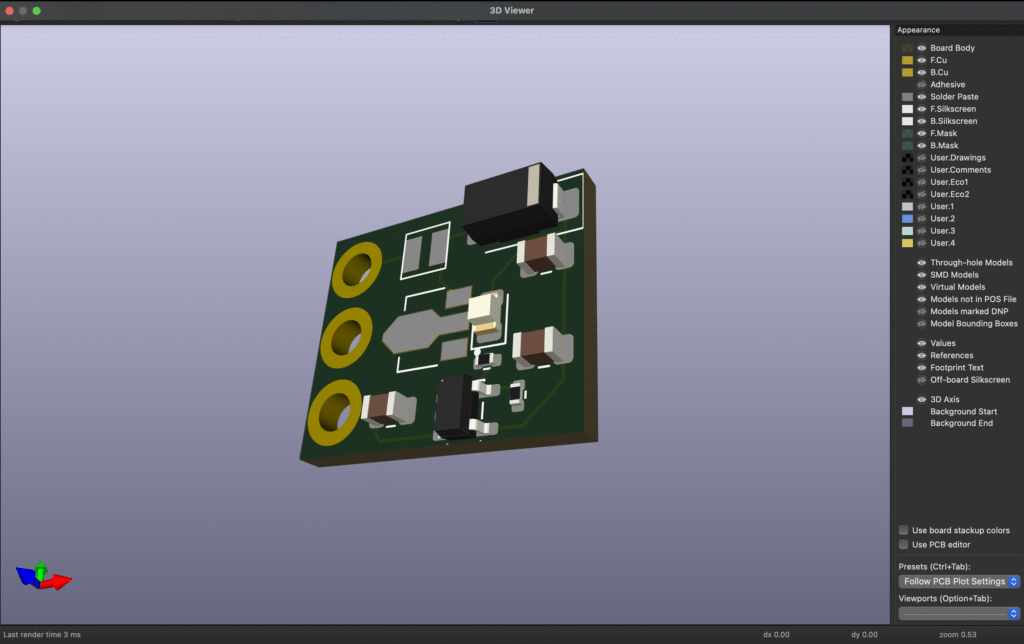
3D Model (KiCad)
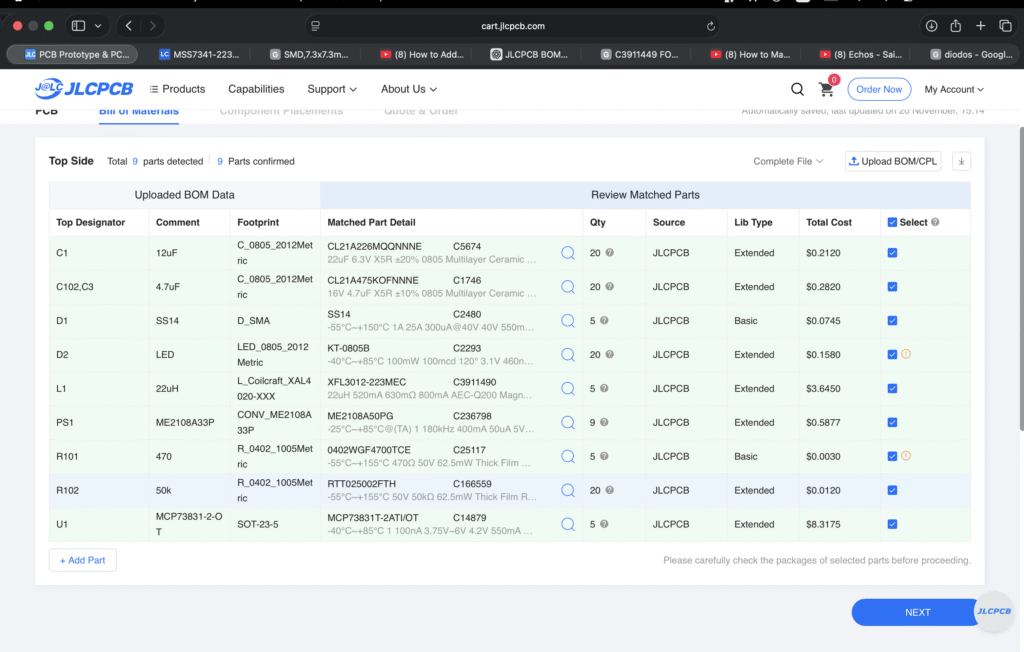
Main components:
ME2108A50 – Step-up (boost) DC-DC converter
MCP73831 – Single-cell Li-ion charge controller
22 µH Inductor – Energy storage for the boost stage SS14 Schottky Diode – Fast, low-loss rectification Ceramic Capacitors (0805) – Input/output filtering Programming Resistor – Sets charging current Status LED – Visual charging indication